Blog
How to Choose Industrial Gaskets: Spiral-Wound, Kammprofile and Graphite Compared
Published: · 2 min read
For steam, hot oil and high pressure, compressed fibre sheet is not enough. How do you choose between spiral-wound, kammprofile, pure graphite and metal-jacketed gaskets by temperature, pressure, flange type and bolt load?
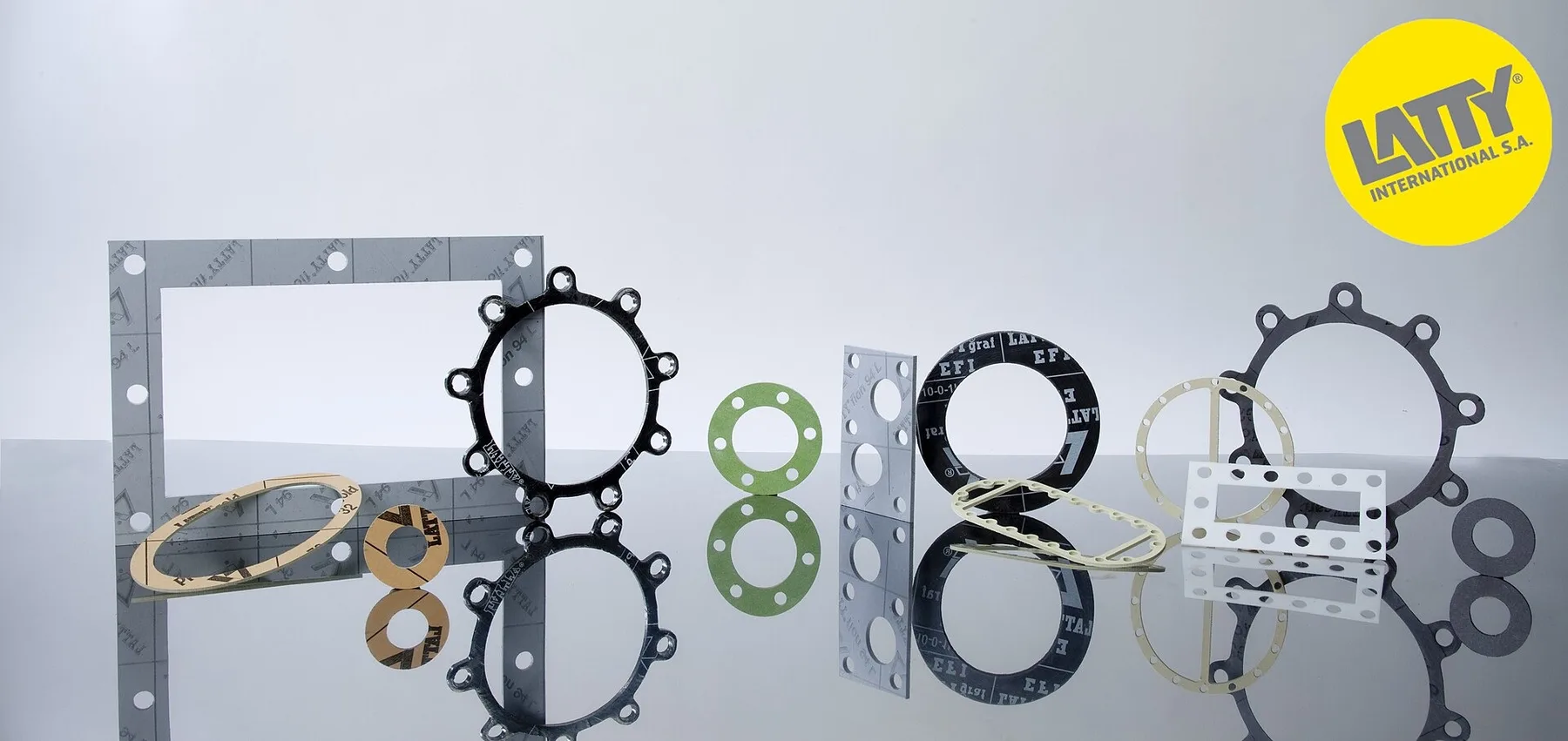
On an ordinary water line, a gasket cut from compressed fibre sheet runs for years without trouble. But when steam reaches 300 °C, pressure exceeds 40 bar or the flange breathes constantly with thermal cycling, a sheet gasket creeps, hardens and leaks. This is where industrial gaskets come in. This article summarises the four main types and the selection criteria in plain language.
1. Spiral-wound gasket
Made by winding a V-profiled stainless steel strip spirally with graphite or PTFE filler. Inner and outer ring options are available (the outer ring centres the gasket, the inner ring prevents extrusion).
- Temperature: −200 / +550 °C (graphite filler)
- Pressure: Class 150–2500, up to 250 bar
- Where: steam, condensate, refinery and petrochemical pipelines; EN 1514-2 and ASME B16.20 standard flanges
- Advantage: elastic recovery against thermal cycling and vibration
2. Kammprofile gasket
A serrated (comb-profiled) metal core faced with graphite on both sides. The core carries the load, the graphite seals.
- Temperature: up to +550 °C
- Where: heat exchangers, large-diameter flanges, connections with low bolt load
- Advantage: seals at very low seating stress; a damaged graphite layer can be renewed
3. Pure graphite gasket
Cut from flexible graphite sheet (reinforced with stainless foil). As easy to work as sheet gasket, but rated to 550 °C.
- Where: steam and hot oil flanges, boiler covers, non-standard geometries
- Advantage: easy custom cutting, low cost, chemical resistance (pH 0–14)
- Caution: extrusion risk at high pressure; choose reinforced sheet
4. Metal-jacketed gasket
A soft filler (graphite, ceramic) enclosed in a metal jacket. Made for very large or specially shaped faces such as heat exchanger and boiler covers.
Selection criteria
- Temperature: below 250 °C compressed fibre sheet; 250–550 °C graphite-based types; above that mica or special solutions.
- Pressure: below 40 bar sheet; 40–100 bar graphite or kammprofile; above 100 bar spiral-wound (with inner ring).
- Flange face: raised face (RF) for spiral/kammprofile; flat face (FF) for full-face sheet or graphite.
- Bolt load: kammprofile at low bolt load; spiral-wound where sufficient load is available.
- Medium: PTFE filler instead of graphite in oxidising media; PTFE for food.
Common mistakes
- Installing a spiral-wound gasket without an outer ring and without centring.
- Reusing a graphite gasket (it is single-use).
- Tightening bolts in one go instead of in a cross pattern with staged torque.
- Fitting a new gasket on a worn flange face and expecting the gasket to compensate.
How we help
Send the medium, temperature, pressure, flange size and type through the quote form; we will recommend the right type and size with a price. See flange gaskets for standard flanges and industrial gaskets for the full table. From gland packing to gasket sheet, from O-rings to copper washers: cover your plant's entire sealing needs from a single supplier, from stock.