Blog
Where Are Fiberglass and Ceramic Fibre Tapes Used? High-Temperature Insulation Guide
Published: · 2 min read
Fiberglass tape insulates and seals up to 550 °C, ceramic fibre up to 1,260 °C. From furnace doors to exhaust wrap, which one for which job? A manufacturer's guide to thickness, width and coating selection.
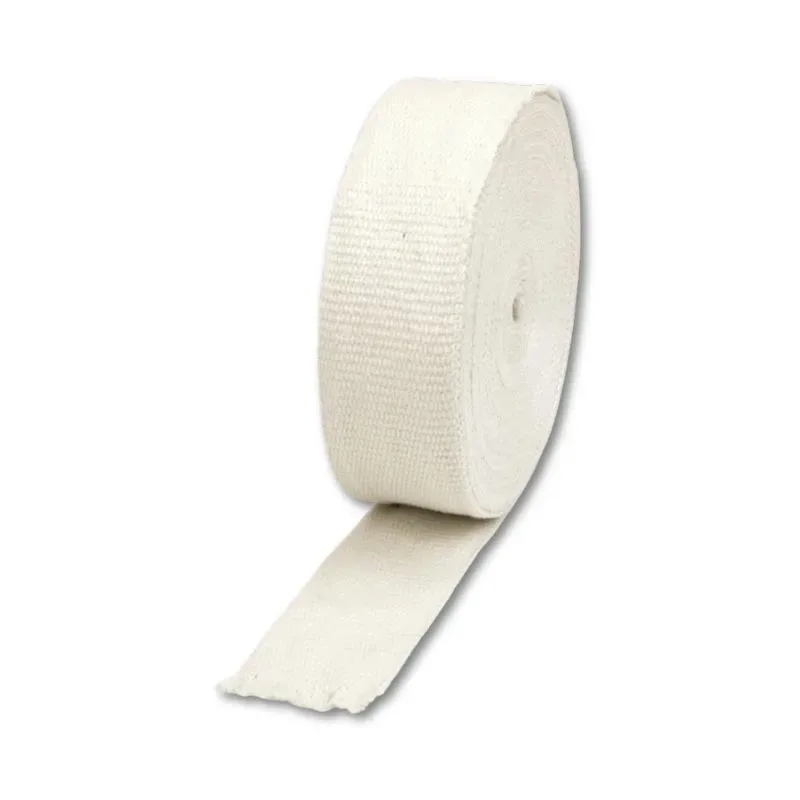
When sealing and insulation are needed at high temperature, rubber, cotton and PTFE drop out. Two technical textiles step in: fiberglass tape and ceramic fibre tape. Both are non-combustible, rot-proof and have low thermal conductivity; the differences are temperature limit, cost and texture.
Fiberglass tape: up to 550 °C
Woven from alkali-free E-glass yarns. It works continuously at 550 °C and tolerates short peaks. Flexible, easy to cut and economical. Applications:
- Furnace, boiler and flue door seals: 1–6 mm thick tape laid in the door channel stops hot gas leakage.
- Pipe and hose insulation: as a wrap on exhaust, steam and hot-air lines it reduces heat loss and contact burns.
- Cable and equipment protection: shields cables from radiant heat in welding areas and hot zones.
- Glass, ceramics and foundry: handling hot parts, insulating mould and ladle edges.
- Welding and cutting screens: spark and spatter protection.
Variants: plain or diagonal weave, graphite-coated (surface wear resistance), self-adhesive (fast installation), silicone-coated (dust-free, water-repellent).
Ceramic fibre tape: up to 1,260 °C
Woven from alumina-silica ceramic fibre with glass fibre or stainless wire reinforcement. The only textile solution when continuous service above 1,000 °C is required:
- Industrial furnaces, annealing and heat-treatment furnace doors
- Boiler inspection doors and burner flanges
- High-temperature seals in the glass and steel industries
- Exhaust manifold and turbine connections
Ceramic fibre is more expensive and more brittle; below 550 °C fiberglass is both sufficient and economical.
Which one to choose?
| Criterion | Fiberglass tape | Ceramic fibre tape |
|---|---|---|
| Continuous temperature | 550 °C | 1,000–1,260 °C |
| Flexibility | High | Medium |
| Cost | Low | High |
| Typical use | Boiler, flue, pipe, exhaust | Furnace, annealing, heat treatment |
Choosing size and thickness
For a door seal choose a tape 1–2 mm narrower than the channel and 20–30 % thicker than its depth; it compresses and seals when the door closes. In wrap applications a 50 % overlap doubles the insulation. Standard widths 20–150 mm, thicknesses 1–6 mm, in 30 m rolls.
Yaman Tekstil fiberglass tape
Our fiberglass tape is woven on our own loom line; thickness and width tolerances are monitored on the line. Graphite-coated, self-adhesive and custom-width orders are prepared on short lead times. Contact us for ceramic fibre tape and blanket as well. Product page: fiberglass tape. From gland packing to gasket sheet, from O-rings to copper washers: cover your plant's entire sealing needs from a single supplier, from stock.