Blog
How to Choose a Flange Gasket: DN, PN, FF/RF and Material Guide
Published: · 2 min read
Three pieces of information are enough to order a flange gasket: size, pressure class and flange face. Practical notes on choosing between compressed fibre, graphite and PTFE by medium, the DIN/EN vs ANSI difference, thickness and bolt torque.
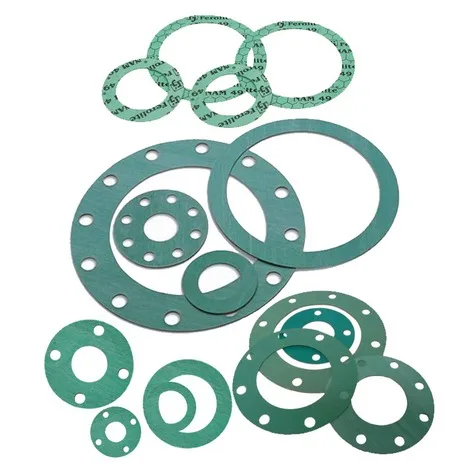
Pipelines, pumps, valves, heat exchangers: all are joined by flanges, and between every pair of flanges sits a flange gasket. Choosing the right one is not complicated; three dimensional facts and the type of medium are enough. This article walks through what to check when ordering.
1. Size: DN or inch
Flange gasket size is expressed as the nominal pipe size: DN (metric, e.g. DN 50) or inch (e.g. 2″). The gasket size is the nominal size of the line, not of the flange itself. If unsure, measure the gasket's inner and outer diameter and we will match it to standard tables.
2. Pressure class: PN or Class
The same DN 50 flange has a different bolt circle in PN 10 and PN 40, so the hole positions of full-face gaskets differ.
- DIN / EN 1514-1: PN 6, 10, 16, 25, 40
- ANSI / ASME B16.21: Class 150, 300, 600
Raised-face (RF) gaskets are defined only by inner and outer diameter and are less affected by pressure class, but the outer diameter still changes with the class.
3. Flange face: FF or RF?
- FF (flat face): the gasket face also covers the bolt holes; common on cast iron and plastic flanges. A full-face (bolted) gasket is used.
- RF (raised face): the sealing surface is a narrow ring inside the bolts; standard on steel flanges. A ring gasket between inner and outer diameter is used.
4. Material selection
| Medium / condition | Recommended material |
|---|---|
| Water, air, oil, below 250 °C | Compressed fibre (asbestos-free aramid-NBR) sheet |
| Steam, hot oil, 250–550 °C | Graphite (stainless foil reinforced) |
| Acids, alkalis, solvents, food | PTFE (pure or filled) |
| High pressure and thermal cycling | Spiral-wound or kammprofile (industrial gaskets) |
5. Thickness
Standard 2 mm is the right choice for most applications. Use 3 mm on warped or scratched flange faces, 1.5 mm on precisely machined faces. A thicker gasket creeps more; avoid unnecessary thickness.
6. Installation
Clean the flange faces and scrape off old gasket residue. Fit the gasket dry (no adhesive for graphite and PTFE). Torque the bolts in a cross pattern in three stages (30 %, 60 %, 100 %). On steam lines, check torque after the first heat-up.
Flange gaskets from stock
Yaman Tekstil Salmastra supplies compressed fibre, graphite and PTFE flange gaskets from stock in DN 15–DN 600, PN 10–40 and Class 150–300; non-standard sizes are prepared the same day with our custom-cut service. Product page: flange gaskets. From gland packing to gasket sheet, from O-rings to copper washers: cover your plant's entire sealing needs from a single supplier, from stock.